Culture or Christ?

Have you ever had one of those ‘lightbulb moments’? You know, when a new realization dawns on you? Like a veil has been lifted from your eyes. Like the lights have been turned on and you can actually see now. Ok, enough analogy. This is what my faith journey has been like for the last several years.

I was raised in a home that considered themselves Christians. We believed in Jesus. We went to church, when something else didn’t conflict with it. We prayed together at family gatherings on occasion. But Jesus was never a way of life, just a small part of it. I don’t fault my parents for this. It was infinitely more than what they had as children. But you could imagine, I would have a lot to learn as I got older. Starting back in 2010, that unveiling process began. Over the next 15 years, I would learn more about Jesus and my faith than I ever thought was possible. If anything, this has given me a desire to learn even more, and also to question what I think I know and have been taught. As a teacher myself, these are two things that I try to instill in my students: love learning and question what you learn.

It is natural for many to want to fit in. There are not a lot of ‘earth-shakers’ who seek to question and challenge the status quo. Comfort and acceptance drive a lot of people. These things can even cause some to turn a blind eye to certain possibilities. The possibility that what they’ve been taught and believed for their entire life is wrong, for example. Other than comfort and acceptance, pride is a major obstacle to change. However, we cannot let comfort, acceptance, and pride, drive a willful ignorance, or even create a hostility towards those who choose to question.

I believe the number one criteria for every believer, is humility. It should drive our approach towards God, His word, and towards those around us. The more we admit we don’t know the more we are able to grow. I didn’t mean to rhyme just then. Over the years I have learned that so much of what I was taught has been determined by culture rather than the Bible itself. Nowhere is that more obvious than in certain celebrations.

Here are some questions to ponder. Why would Christians teach their kids that Santa is real when they know it is a lie? Why would Christians put up trees and give their kids presents to honor the birth of the Savior of the world? Why would Christians dye eggs and celebrate a bunny during a time when we are supposed to honor our Passover Lamb, Jesus? Why would Christians dress their kids up in costumes and celebrate a day that revolves around witches, monsters, and death? Why would Christians welcome these cultural distractions when they ultimately lure our kids’ focus away from Jesus?

As believers, our ultimate goal is to abide in Christ…to love Him and make Him known. Santa, trees, presents, candy, costumes, bunnies, dyed eggs, do the exact opposite. As someone who grew up in that, I promise that these things only put our children at the center of their own lives, not Jesus. Colossians 3 teaches that Jesus is our very life. In John 11 Jesus says He is the resurrection and the life. In Galatians 2, it says that we no longer live but it is Christ who lives in us. In John 15, Jesus says to abide in Him.

The hope of every Christian parent should be that their kids will love Jesus with their whole hearts and make Him the Lord of their lives. The hope of every Christian should be to honor Christ and make Him known. For all of us, that takes a sincere and humble approach to examine our traditions and beliefs.

There are many other things I have had to question, that I have been taught in the church, that aren’t in the Bible. Doctrine often gets elevated above the Bible. Many of these doctrines exist because pride has made people claim that their interpretation, or what they learned in Bible college, or what their denomination adheres to, is superior to all others. Much of that too has been informed by culture. The fact is, the Bible is complex. Much of it is meditation literature. As someone I know often says, “it is worth many long walks and cups of tea to contemplate.” And honestly, I think Christians need a whole lot more humility in their approach to God’s word. If the Bible isn’t clear on something, we need to stop claiming it is. There is no room for pride behind the pulpit or conceit among the congregation. Jesus is the way, the truth, and the life, and that’s how we should be living our lives.

Peace in Christ brothers and sisters.

Remember Your Audience

In a world where so much becomes a performance, Jesus wants to redirects our hearts back to what matters: practicing our faith before an audience of One. In Matthew 6, part of what is known as the sermon on the Mount, He teaches that giving, praying, and fasting are meant to be intimate expressions of devotion—not spiritual displays.

When we give, Jesus warns, “Beware of practicing your righteousness before other people in order to be seen by them” (Matthew 6:1). Instead, He reminds us, “When you give to the needy, do not let your left hand know what your right hand is doing… and your Father who sees in secret will reward you” (Matthew 6:3–4). God sees the quiet generosity that others never notice.

When we pray, we’re invited into a private conversation with our Father. Jesus says, “Go into your room and shut the door and pray to your Father who is in secret” (Matthew 6:6). God isn’t impressed with long speeches or public displays; He delights in honest hearts. As 1 Samuel 16:7 reminds us, “The Lord looks on the heart.”

When we fast, Jesus says not to make it obvious or dramatic. “When you fast, do not look gloomy… but anoint your head and wash your face, that your fasting may not be seen by others… and your Father who sees in secret will reward you” (Matthew 6:16–18). Fasting becomes powerful not because others see our sacrifice, but because God sees our dependence.

In all these practices, Jesus draws our focus to the unseen God who watches, listens, and treasures every sincere act of devotion. The world may overlook what we do in secret—but “your Father who sees in secret” never does. And truly, His approval is enough.

Peace in Christ brothers and sisters.

Awaken the Dawn

With a heavy heart, I opened my Bible. I began in Psalm 108 and went no further. This Psalm is a beautiful declaration of faith, joy, and confidence in God. Exactly where I knew my heart should be. David did not write a half-hearted song; it’s worship that springs from deep trust. Even before his circumstances change, David chooses to lift his eyes and his voice to God.

“My heart is steadfast, O God! I will sing and make melody with all my being! Awake, O harp and lyre! I will awake the dawn! I will give thanks to you, O Lord, among the peoples; I will sing praises to you among the nations. For your steadfast love is great above the heavens; your faithfulness reaches to the clouds. Be exalted, O God, above the heavens! Let your glory be over all the earth!”‬‬

Psalm‬ ‭108‬:‭1‬-‭5‬ ‭ESV

A Heart Set Firm on God

A steadfast heart doesn’t waver with emotion or circumstance. It’s anchored in who God is. David’s focus isn’t on his enemies or his problems, but on God’s unchanging love and faithfulness. When we choose praise before victory, we declare our faith that God is already at work.

Awakening the Dawn

David says, “I will awaken the dawn.” I love this! What a picture of active worship! Instead of waiting for joy to come, David brings it by starting his day with praise. His music becomes a sunrise of faith. We, too, can awaken the dawn in our own lives by starting each morning with gratitude, worship, and the Word of God.

Praise That Reaches the Nations

David’s praise is not private—it’s global: “I will praise you, Lord, among the nations.” True worship spills over. When we proclaim God’s goodness, others see His glory. Our steadfast faith becomes a testimony that shines far beyond our own circle. The world is changed when God’s people praise Him, especially in their times of difficulty.

Love Higher Than the Heavens

This section of the psalm ends with awe. God’s love is immeasurable—“higher than the heavens”—and His faithfulness stretches “to the skies.” When we look up, we’re reminded that His promises are vast, enduring, and beyond comprehension.

What does it mean for your heart to be “steadfast” today? How can you “awaken the dawn” through worship and gratitude? In what ways can your praise reflect God’s glory to others?

Lord, make our hearts steadfast in You. When we feel weary or uncertain, remind us that Your love never fails. Let our praise rise like the dawn and fill the world with the sound of Your glory. Be exalted, O God, above the heavens—let Your glory shine over all the earth.

Peace in Christ brothers and sisters.

Who’s Purpose Prevails?

“And immediately he left the synagogue and entered the house of Simon and Andrew, with James and John. Now Simon’s mother-in-law lay ill with a fever, and immediately they told him about her. And he came and took her by the hand and lifted her up, and the fever left her, and she began to serve them. That evening at sundown they brought to him all who were sick or oppressed by demons. And the whole city was gathered together at the door. And he healed many who were sick with various diseases, and cast out many demons. And he would not permit the demons to speak, because they knew him. And rising very early in the morning, while it was still dark, he departed and went out to a desolate place, and there he prayed. And Simon and those who were with him searched for him, and they found him and said to him, “Everyone is looking for you.” And he said to them, “Let us go on to the next towns, that I may preach there also, for that is why I came out.””

Mark‬ ‭1‬:‭29‬-‭38‬ ‭ESV‬‬

As the ministry of Jesus grew, more and more people placed their expectations on Him. They may not have admitted it, but the masses began to demand Bis attention and time. Whatever their motive may have been, they had their purposes in mind. Jesus demonstrated what it meant to focus in on God’s purpose above the expectations placed on us by others. That can easily happen in ministry and in nearly every other avenue of life. As a husband, father, friend, teacher, business owner, and on and on, there are demands and purposes placed on my life. It is my job to decipher whether those are God’s purposes, mine, or from others. As a “people pleaser” it can be hard for me to say no. What has been so meaningful to me is to realize that in saying yes to someone I may be saying no to God. It is His purpose and plan that I need to be in tuned with. That way I can weed out all the noise and clutter. My “good things” can become “godly things” when I stay true to His plan for my life and not allow others, or my own selfish desires, to direct my path.

“Now as they went on their way, Jesus entered a village. And a woman named Martha welcomed him into her house. And she had a sister called Mary, who sat at the Lord’s feet and listened to his teaching. But Martha was distracted with much serving. And she went up to him and said, “Lord, do you not care that my sister has left me to serve alone? Tell her then to help me.” But the Lord answered her, “Martha, Martha, you are anxious and troubled about many things, but one thing is necessary. Mary has chosen the good portion, which will not be taken away from her.””‬‬

Luke‬ ‭10‬:‭38‬-‭42‬ ‭ESV

This is one of my favorite stories in the ministry of Jesus because it reminds me of what it can look like to choose the most important things. I am a doer. I like to get things done. And what I often lack is the quality time at the feet of Jesus, listening to and learning from Him. Jesus showed us what it looks like to fight for solitude with God and Mary did too.

I pray, that in your busy life, God’s purposes will prevail. That you will be able to hear Him through the noise and to fight for the solitude like Jesus did. Please pray the same for me.

Peace in Christ brothers and sisters.

The Treasure and the Pearl

How much do we value the Kingdom?

A few nights ago, I was reading a familiar story to my kids before bed. The story got me thinking a lot about what I value in life. Interestingly, earlier that evening, we had been watching a movie where a person was confronted with just a week to live and she wrestled with how she should spend it. And she fumbled her way in a very self seeking manor to figure out how to spend her time. The movie presented the answer in a very worldly way as one would expect. But that movie already had me in that line of thinking before I read to my children a couple of hours later.

“Look carefully then how you walk, not as unwise but as wise, making the best use of the time, because the days are evil. Therefore do not be foolish, but understand what the will of the Lord is.”

Ephesians 5:15-17 ESV

All of us are guaranteed today. None of us are guaranteed tomorrow. So, in reality, we are all meant to make the most of each day. And how we do that will be determined by what we value.

Text: Matthew 13:44–46

“The kingdom of heaven is like treasure hidden in a field, which a man found and covered up. Then in his joy he goes and sells all that he has and buys that field. Again, the kingdom of heaven is like a merchant in search of fine pearls, who, on finding one pearl of great value, went and sold all that he had and bought it.”

You see, everyone is searching for something of value in life: success, love, peace, security, things, wealth, and the list goes on. Jesus tells two short parables to show us that the greatest treasure is not in this world, but in the kingdom of heaven. I realize this isn’t breaking news but it does leave us all with a question: Do we value the kingdom this much?

C.S. Lewis – “Aim at heaven and you will get earth ‘thrown in.’ Aim at earth and you will get neither.”

The Value of the Kingdom

The kingdom of heaven is compared to two things: hidden treasure and a pearl of great price. Neither of these are ordinary things—they are priceless. They are worth more than the sum of the person’s life. More than all of their possessions, career, and wealth. But what exactly is the Kingdom? The kingdom represents knowing Christ, being reconciled to God, eternal life, and true joy. It is knowing and being known by God. Paul said in Philippians 3:8 that he counted everything as loss compared to the surpassing worth of knowing Christ. Not somethings, but everything.

There in lies the heart of the question. Do we count everything as loss compared to knowing Jesus? Would we forsake everything for the cause of the kingdom? Both men in the parables sell all they have to gain the treasure. This is not a half-hearted pursuit; it is total commitment. We can’t treat our faith in Christ as an add-on to life. We cannot cling to the world and fully embrace Christ at the same time.

Jesus said in Luke 14:33 – “Any one of you who does not renounce all that he has cannot be my disciple.” There has to be a willingness and a readiness to give up anything and everything in the pursuit of Christ and making Him known. Jesus also said in Matthew 10:38 — “And whoever does not take his cross and follow me is not worthy of me.”

And here’s the key…in our surrender, in our willingness to give everything, it is all done with joy. Notice in v. 44: “Then in his joy he goes and sells all that he has…” Giving up everything for Christ is not drudgery—it is joy, because we gain something infinitely greater.

Jim Elliot once said: “He is no fool who gives what he cannot keep to gain what he cannot lose.”

True discipleship is not about sacrifice alone—it is about finding the deepest joy and fulfillment in God Himself. In Psalm 16:11 we read – “In Your presence there is fullness of joy; at Your right hand are pleasures forevermore.”

We pursue a lot of things in life. I have pursued my wife, I have pursued my career. I have pursued knowledge and learning. I have pursued a standard of living that provides comfort and security to my family. I don’t believe any of that is bad as long as it’s secondary to my pursuit of Christ. And if I am not joyfully willingly to give up the money, the job, the home, the possessions for Him then my heart is not in the right place.

Augustine of Hippo – “Christ is not valued at all unless He is valued above all.”

Peace in Christ brothers and sisters.

Letting Jesus In

Recently my daughter prayed and asked Jesus to help her to let Him in. Keep in mind, she has already accepted Jesus as her Lord and Savior. But, as all followers of Jesus know, we have to continue to pursue that relationship the rest of our lives. I think this is what her precious 11 year old heart was searching for.

In this post I would like to present a picture of what it looks like to let Jesus in. From the beginning of the relationship to the end.

The Invitation

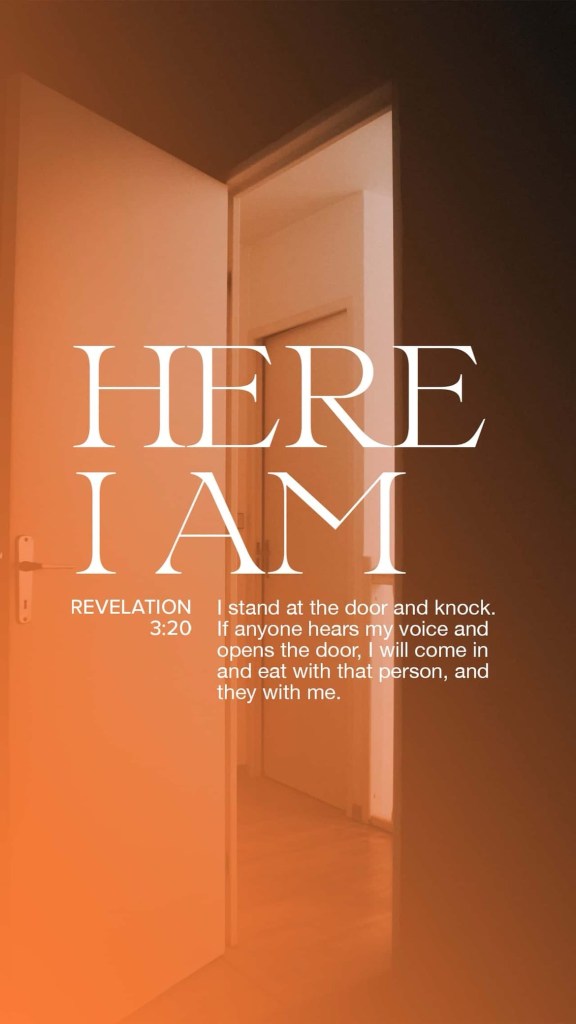
Here I am! I stand at the door and knock. If anyone hears my voice and opens the door, I will come in and eat with that person, and they with me.

Revelation 3:20

This powerful image shows Jesus as someone who initiates relationship, but waits to be welcomed in. Jesus never forces His way into our lives. Opening the door represents faith, surrender, and a desire for fellowship with Him.

Yet to all who did receive him, to those who believed in his name, he gave the right to become children of God.

John 1:12

Letting Jesus in means receiving Him—not just as a visitor, but as your Savior, King, and the center of your life. Believing in Him opens the door to being born again into God’s family.

If you’re like me, you have probably had to repeat this process more than once. I did at the age of 12, and was baptized. I did again at the age of 27 when my faith became of central importance. I have also had many moments since when I am disconnected and I hear Him knocking again. These aren’t salvation moments, I know I am saved and redeemed. These are sanctifying moments. Those reminders that I am not where I am meant to be in my headspace and heart. Those subtle, and sometimes not so subtle redirecting moments.

The Process

I will give you a new heart and put a new spirit in you…

Ezekiel 36:26

When Jesus enters your life, He doesn’t just visit—He renovates. He gives a new heart, replacing coldness or stubbornness with a heart that wants to obey and love Him.

To have found God and still to pursue Him is the soul’s paradox of love.

AW Tozer

Walking with Jesus means both finding and continually seeking Him—never settling for a distant relationship. Always wanting more. Always going deeper.

And we all, with unveiled face, beholding the glory of the Lord, are being transformed into the same image from one degree of glory to another. For this comes from the Lord who is the Spirit.

2 Corinthians 3:18

I think we can all agree that the Christian walk should be a progressive one in the sense that we are moving forward and upward and deeper. And it should also be transformative in the sense that we are more like Jesus in attitude, action, speech, and motivations the longer we know Him. Not to say that we won’t make mistakes or have our “moments”. But it should be a general upward and life altering change throughout life.

Nearness to God brings likeness to God. The more you see God, the more of God will be seen in you.

Charles Spurgeon

Every day should be a commitment to reflect on whether this is true in us.

The Commitment

I have been crucified with Christ and I no longer live, but Christ lives in me…

Galatians 2:20

Letting Jesus in is more than a one-time moment. It means allowing Him to live in you, shape your thoughts, and guide your actions. His presence becomes your source of strength and purpose. Letting Jesus in means surrendering to His Lordship (rulership, authority which overrides our own.) in Medieval times Lords controlled the land, your life, your freedom, your movement, your purpose. They also provided everything their vassals needed in food, land, and protection. Those were imperfect people and an imperfect system. But the analogy works in many ways. Our Lord is not a despot. His heart is for the flourishing of His people. Far too often, I afraid, we treat Jesus as a guest to be entertained or invited in when we need Him. But He is owed so much more.

For by him all things were created, in heaven and on earth, visible and invisible, whether thrones or dominions or rulers or authorities—all things were created through him and for him. And he is before all things, and in him all things hold together.

Colossians 1:16-17

Jesus deserves to be the captain of your ship because He built the ship, maintains the ship, and owns the ship.

Discipleship is the process of becoming who Jesus would be if he were you.

Dallas Willard

A true walk with Jesus transforms your character to reflect Him in your unique life and context. Remember, our mission is to help bring His kingdom wherever we are and wherever we go. I tell my kids (and have to remind myself) all of the time that our sole purpose is to love God and make Him known. What better way to do that than to allow Him to steer our very motivations for life, love, purpose, relationship, and more?

Remain in me, as I also remain in you.

John 15:4

Letting Jesus in is ongoing. It’s not just a decision, but a relationship of remaining close to Him, hearing His voice, and living connected to His love every day. Abiding With Jesus is a Lifelong Commitment.

Letting Jesus in is ongoing. It’s not just a decision, but a relationship of remaining close to Him, hearing His voice, and living connected to His love every day. Abiding With Jesus is a Lifelong Commitment.

Francis Chan

There are very real pitfalls. Those of apathy…of distraction…misalignment…misjudgments…and the like. To let Jesus in is something we have to contend for, hold on to, and adamantly desire. The Christian life is just that, a lifelong lifestyle.

The Christian does not think God will love us because we are good, but that God will make us good because He loves us.

CS Lewis

It is imperative to remember that walking with Jesus is not about earning love but being changed by it. There is so much grace and so much love in the pursuit.

Peace in Christ brothers and sisters.

This is the Way part six

This is the sixth post in a series where we are looking at the gospel way. What it means to follow Jesus. Today’s may be the most challenging yet. It confronts every single one of us. We have all faced unkind and even hateful people. So did Jesus. And He calls us fi respond just like He did.

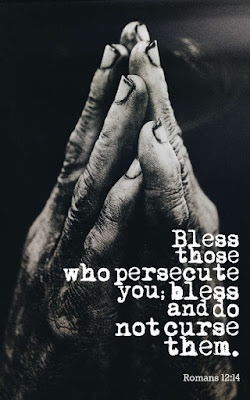
Bless those who persecute you; bless and do not curse.

Romans 12:14 (NIV)

This verse doesn’t come naturally. In fact, it might be one of the hardest commands in Scripture. Our instincts cry out for justice—or at the very least, distance—when we are wronged. But Paul, inspired by the Spirit, challenges us to respond in a radically different way: with blessing.

A Countercultural Command

In a world that praises revenge, canceling, and self-protection, blessing our enemies seems foolish. Yet Paul’s instruction echoes the very words of Jesus:

“Love your enemies and pray for those who persecute you.” (Matthew 5:44)

The way of Christ isn’t about repaying hurt with more hurt. It’s about overcoming evil with good (Romans 12:21). When we bless someone who has wounded us, we are not approving their actions—we are rising above them. We are choosing mercy over bitterness, grace over retaliation.

What Does “Bless” Really Mean?

To bless someone in this context means to:

Speak well of them. To wish them good and not harm. Pray for their repentance, healing, or restoration. Refuse to return insult for insult.

This is an act of spiritual maturity and surrender. It means trusting God to be the righteous judge while we walk in the love and humility He has shown us.

Why Should We Bless?

Because God blessed us when we didn’t deserve it. Romans 5:8 reminds us, “While we were still sinners, Christ died for us.” We were enemies of God, yet He chose to bless us with grace. Because it frees us. Bitterness is a prison. Forgiveness and blessing set us free. They release us from being defined by someone else’s actions and allow us to walk in peace. Because it reflects Jesus. When Jesus hung on the cross, mocked and beaten, He prayed, “Father, forgive them.” If we belong to Him, we are called to mirror that kind of love—even when it’s costly.

How Do We Live This Out?

Start with prayer. You may not feel like blessing those who hurt you—but bring that honestly to God. Ask Him to soften your heart. Guard your words. Refuse to gossip or curse the one who wronged you. Instead, speak truth with grace. Seek peace, if possible. You may not be able to restore the relationship, but you can refuse to fuel hostility.

Romans 12:14 is a call to higher ground. It’s a reminder that we are citizens of a different kingdom—one marked by love, not vengeance. This kind of living doesn’t come from our own strength; it flows from a heart surrendered to Christ.

Let’s be people who bless when it’s hardest. Because in doing so, we show the world a glimpse of the Savior who blessed us first.

Peace in Christ brothers and sisters.

Freedom Through Forgiveness

Therefore, my friends, I want you to know that through Jesus the forgiveness of sins is proclaimed to you. Through him everyone who believes is set free from every sin, a justification you were not able to obtain under the law of Moses.

Acts 13:38-39

In these powerful verses, the Apostle Paul delivers a revolutionary truth at the heart of the Christian gospel. Speaking to both Jews and Gentiles in the synagogue at Pisidian Antioch, Paul announces something radically new: forgiveness and freedom through Jesus Christ.

Paul begins with good news: “through Jesus the forgiveness of sins is proclaimed to you.” This is not forgiveness earned or negotiated—it is proclaimed. That word carries weight. It means the message is public, certain, and available to all who hear it. The gospel doesn’t whisper forgiveness—it declares it loudly for sinners, doubters, and outcasts alike.

In a world weighed down by guilt and striving, this message still breaks chains. In a world that has so many who are trying to figure out who they are, struggling with their gender identity, battling impure sexual desires, the gospel has the power to set them free. Free from guilt and free from brokenness. Our forgiveness is not based on merit or rituals, but on the person and work of Jesus. This includes the mistakes we regret, the habits we hide, and the guilt we carry. Jesus doesn’t offer partial freedom. He offers total release. This is a bold claim, but it’s the core of the gospel: Christ sets us free.

Paul contrasts this freedom with what the law of Moses could not do. The law was holy and good, but it could only reveal sin—it couldn’t remove it. It could show us our need for righteousness, but it couldn’t make us righteous. I know people who unfortunately cling to the Old Testament, believing the law can save. Elevating law over Jesus. Clinging to a form of self righteousness. Only Jesus, through His death and resurrection, could provide the justification the law could never achieve. In Christ, we’re not just forgiven—we’re declared righteous before God. This is grace, not earned status. It’s a gift, not a wage.

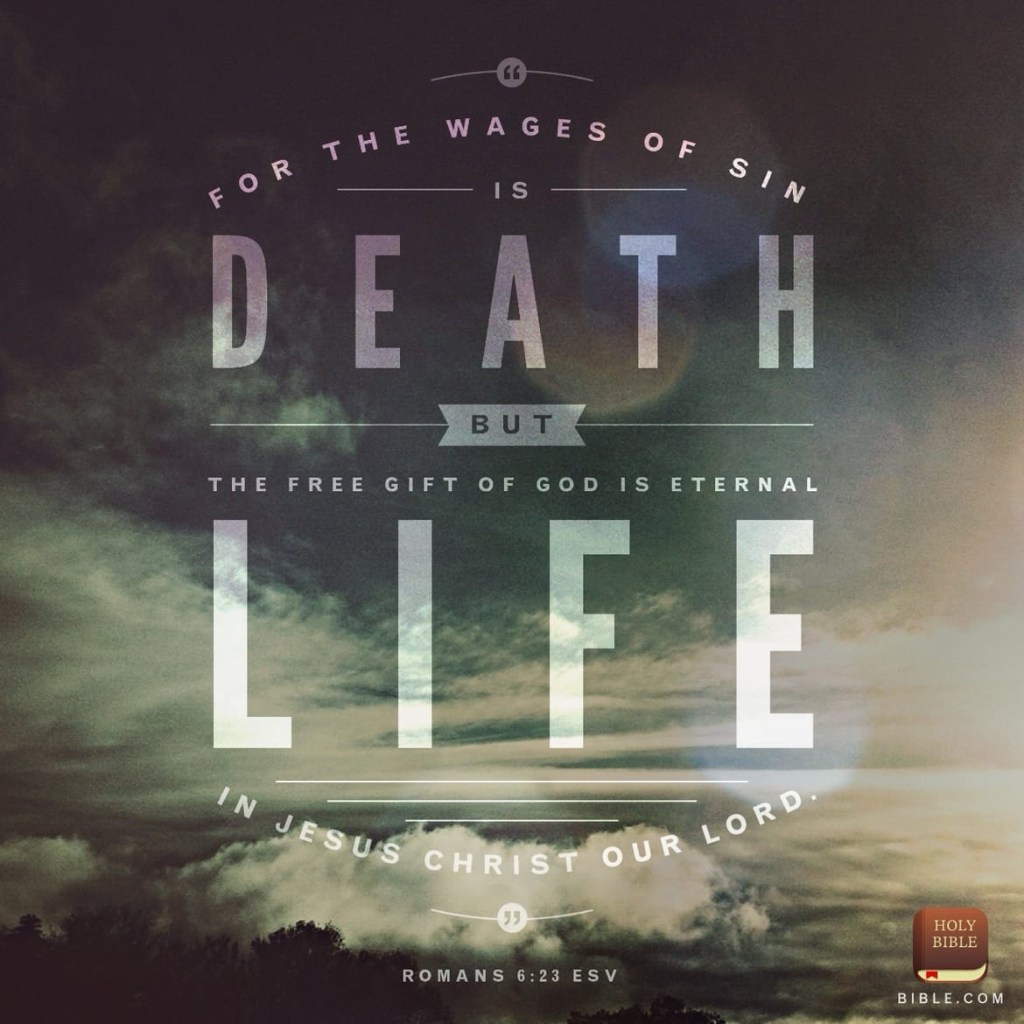
“For the wages of sin is death, but the free gift of God is eternal life in Christ Jesus our Lord.”

Romans‬ ‭6‬:‭23‬ ‭ESV

So today, let these words encourage your heart:

• You are forgiven.

• You are free.

• You are justified by faith, not by works.

Let this message be the one you proclaim to others, too. Because in Christ, freedom isn’t a dream—it’s a reality. Now let the weight fall off your shoulders. Love Jesus and make Him known. Run after the One who has set you free.

Peace in Christ brothers and sisters.

This is the Way part five

It’s been a few weeks since we looked at the Way of Christ as described in Romans 12. Today’s topic is one that I have been honored to experience with many believers in the last 16 years. It was a major attraction into the fold of Christ. When believers give of their time and resources to genuinely seek to meet the needs of others, and open their hearts, homes, and lives to hurting or lost people, the family of Christ grows and people’s lives are changed.

Share with the Lord’s people who are in need. Practice hospitality.

Romans 12:13 (NIV)

In just a few short words, Romans 12:13 captures the heart of Christian community: generosity and hospitality. These aren’t just nice suggestions—they’re tangible expressions of the love that Christ calls us to show.

Share with the Lord’s people who are in need

The early church was known for its radical generosity. In Acts 2 and 4, believers shared everything they had so that “there were no needy persons among them.” This wasn’t socialism—it was sacrificial love. When someone in the family of faith lacked food, shelter, or support, the others stepped in. We are called to do the same. It might look like: Giving to a single mom who’s struggling to pay bills. Donating food or clothes to a local ministry. Covering a medical expense, school need, or gas money for a friend in the church. It could be sponsorship of children in developing countries who lack basic needs. Because the church is more than those in our building. It includes every believer around the globe.

Sharing isn’t always financial, either. Sometimes what people need most is time, presence, or a listening ear. The heart behind it is this: What I have is not mine to hoard—it’s God’s to share.

Practice hospitality

Hospitality means welcoming others into your space, your life, and your heart. In the original Greek, this phrase means “pursue the love of strangers.” It goes beyond entertaining—it’s about making others feel seen, safe, and cared for.

Hospitality might mean: Inviting a new family from church over for dinner. Opening your home for Bible study or prayer. Welcoming someone who feels out of place and helping them find belonging.

Hospitality doesn’t require a Pinterest-worthy house or gourmet food. It just requires a heart that says, “You’re welcome here.” And the “here” is wherever you are. Hospitality goes beyond the four walls of our homes and church.

Why This Matters

These two simple actions—sharing and showing hospitality—are powerful witnesses to the world. In an age marked by individualism and isolation, generosity and hospitality stand out as bright lights. They show that the body of Christ is a family. That we serve a God who welcomes and provides. That our faith is more than words—it’s lived out in love.

Lord, help us to live with open hands and an open heart. Teach us to notice the needs of others and respond with joy. Let our homes and our lives reflect Your generous, welcoming love.

When we live out Romans 12:13, we bring the warmth of God’s love to life in the everyday moments. May we be known as people who give freely and welcome fully—for in doing so, we reflect the very heart of Christ.

Peace in Christ brothers and sisters.

The Purity of the Gospel

In a world full of noise, opinions, and ever-changing values, the Christian gospel stands as a clear and unwavering beacon of truth. Its message is simple, yet profound: salvation by grace alone, through faith alone, in Christ alone. The purity of the gospel is not something we invent or evolve—it is something we receive, guard, and proclaim.

I realize some who read this may not know exactly what the gospel is. At its core, the gospel is the good news that God, in His love and mercy, took on human form in the person of Jesus (Colossian 2:9), walked among us (John 1:14), lived a perfect life knowing that no person ever could (2 Corinthians 5:21), allowed humanity to hang Him on a cross to be a sacrifice for our sins (Romans 5:8), was buried and rose from the dead three days later (1 Corinthians 15:3-4), giving us the hope of new life and a future resurrection. This message is not about human achievement or moral performance. It’s about divine intervention—God doing for us what we could never do for ourselves. It is unearned, undeserved, and freely given.

The gospel is pure, and holy, and beautiful. And that is why everyone needs to hear it. It does, however, pact a punch. The gospel requires we take a hard and accurate view of ourselves, our needs, our shortcomings, our brokenness, and our sin. Only then can we see the beauty that is the gospel.

When we dilute or modify the gospel—adding works, subtracting grace, changing who Jesus is, softening the reality of sin, or removing the need for repentance—we rob it of its saving power. A compromised gospel may feel more comfortable or inclusive to some, but it cannot save anyone. We have to fight the desires for what is “good in our own eyes” and embrace what is actually good for us. Humility. Embracing grace. Accepting God’s love. Allowing Him to transform us more and more into His own likeness. That is when we become the best version of ourselves. That is when we experience the deepest joys and peace that every soul searches for.

The gospel’s purity is what makes it powerful. It tells the hard truth about sin but offers the glorious truth about redemption. It doesn’t offer self-help; it offers a new self in Christ.

Many voices today claim to speak for God. Some offer “prosperity,” “comfort,” or “love is love” as gospel substitutes, but these fall short of the cross. The true gospel does not promise comfort or success; it promises forgiveness, transformation, and eternal life through Jesus.

Jesus said, “I am the way, the truth, and the life. No one comes to the Father except through me” (John 14:6). That statement is both exclusive and inclusive—exclusive in that Jesus is the only way, but inclusive in that He invites all who will believe.

As followers of Jesus, we are called to preserve the purity of the gospel message, not tamper with it. Jude writes, “Contend for the faith that was once for all delivered to the saints” (Jude 1:3). The gospel is not ours to edit—it is God’s truth to trust, live out, and share. May we never lose sight of the beautiful simplicity and power of the gospel. In Christ alone, by grace alone, through faith alone—that is our eternal hope. And it can be yours too.

“He is the image of the invisible God, the firstborn of all creation. For by him all things were created, in heaven and on earth, visible and invisible, whether thrones or dominions or rulers or authorities—all things were created through him and for him. And he is before all things, and in him all things hold together. And he is the head of the body, the church. He is the beginning, the firstborn from the dead, that in everything he might be preeminent. For in him all the fullness of God was pleased to dwell, and through him to reconcile to himself all things, whether on earth or in heaven, making peace by the blood of his cross.”‬‬

Colossians‬ ‭1‬:‭15‬-‭20‬ ‭ESV

Peace in Christ brothers and sisters.